
What Is an AAC Evaluation? A Practical Primer
What is an AAC evaluation? It is an individualized process for understanding how a person communicates, what supports may help, and which features are worth exploring. The goal is not to pick a device from a catalog. A team gathers information about the person, their environments, access, preferences, and trial experiences so they can consider a good feature match.
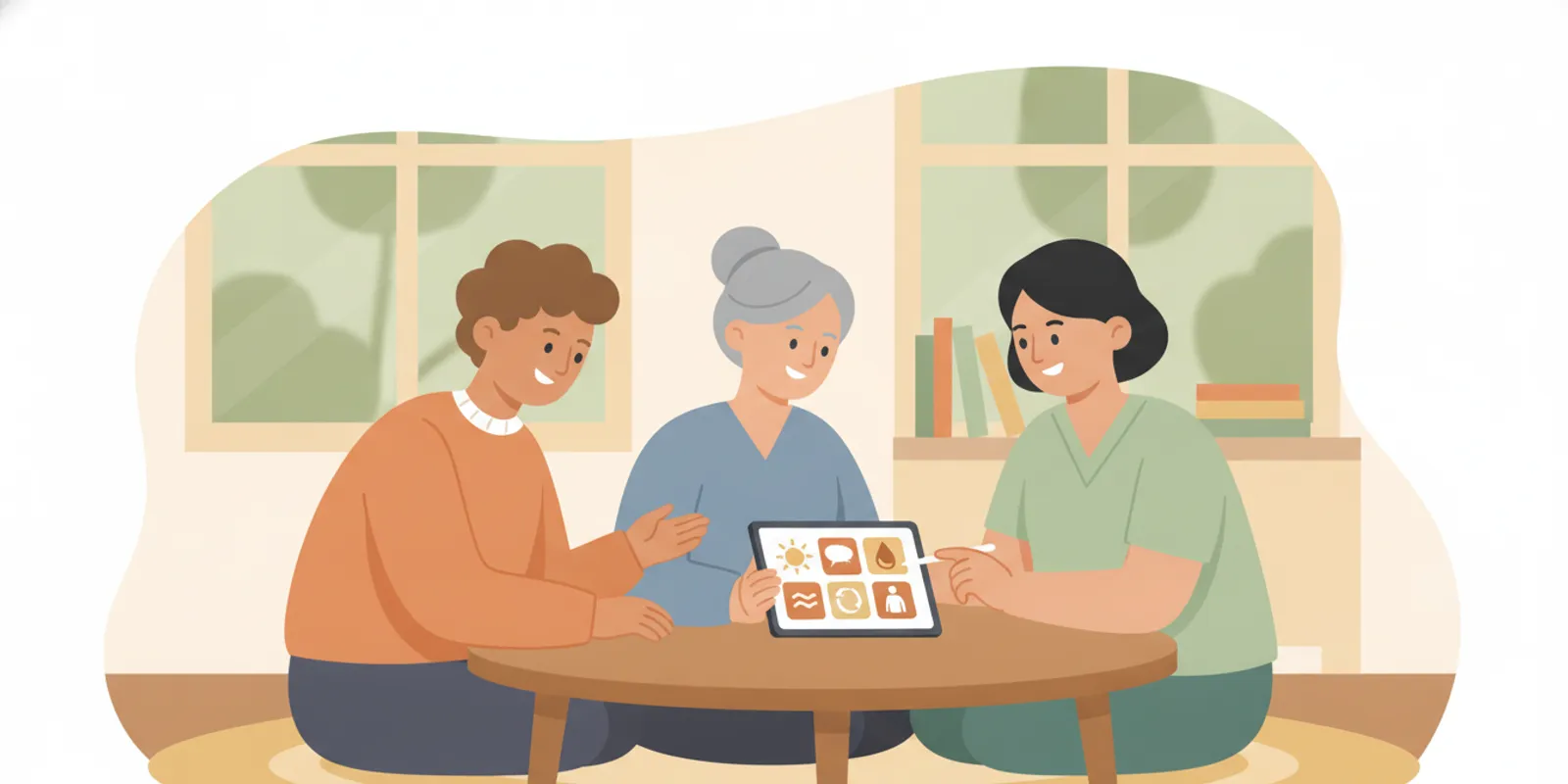
AAC means augmentative and alternative communication. It can include strategies and tools that supplement or replace speech. An evaluation can help a speech-language pathologist (SLP), the AAC user, family, caregivers, and educators discuss what communication support should make possible. Details vary by person and setting.
What is the purpose of an AAC evaluation?
An AAC evaluation explores communication needs and possible supports. It moves a team from a broad question, such as "What could make communication more accessible?" toward specific features to consider. It is an assessment process, not a diagnosis and not a product recommendation from a device company.
An evaluation looks across contexts. A support that works at a table may need adjustments at home, in a classroom, in the community, or with a new partner.
The person who will use AAC should stay at the center. Their choices, reactions, and priorities matter. Family, caregivers, educators, and clinicians may add context, but one observation does not represent every setting. The evaluation does not have to end with a device decision. It can identify questions to explore, features to try, or information the team still needs.
What areas may an evaluator explore?
Assessment is individualized and feature-matched. The areas below are common discussion topics, not a prescribed protocol. An SLP or other qualified team member decides what is appropriate.
Communication needs and everyday environments
The team may explore what the person wants or needs to communicate, with whom, and in which routines. Opportunities can differ at home, school, work, appointments, and social activities. A feature that helps a quick choice may not cover a longer conversation or a topic that needs specific vocabulary.
Access and positioning
Access is how a person selects messages or controls a communication system. An evaluator may explore direct touch, switch access, eye gaze, or other options that fit the person's abilities. Capabilities differ across devices and configurations, so a feature should be assessed in context rather than assumed from a product name.
Positioning, device placement, and posture can change how consistently and comfortably a person can use an access method. A mount, keyguard, or other accessory may be relevant, but compatibility varies by device. A selection that looks easy in a short demonstration can feel different during a longer activity or in another position. The evaluator can record what was tried and what the person showed, without treating one observation as a universal conclusion.
The FlexABLE Handle and Stand is on all Forbes AAC devices except the ProSlate 6, which has a smaller, phone-sized surface. It can be pushed or pulled into place with gross motor movements. It can also be tilted with a closed fist or the palm of the hand, so the person does not need fine motor control to change the angle. An evaluator can compare that setup with other stands during a trial.
Output, vocabulary, and communication preferences
Output is how a system presents a message, such as speech-generating output. Vocabulary and organization influence what the person can say and how they find messages. The team may consider whether a system supports the messages and interactions the person values. A person may also have views about size, appearance, voice, or layout. The aim is not to impose a particular app. It is to investigate relevant options.
The SoundPOD is a wearable speaker for compatible setups. It provides loud audio so a voice can be heard in a noisy setting while staying clear across volume levels. It can dock to the device, or come off so the AAC user wears it and the speech comes from the person rather than the device. A caregiver can also carry it, which supports distance communication in another room or across a classroom. Confirm compatibility for the specific device.
Warranty and technical support
Warranty and technical support are practical differences between companies and devices. Ask what the warranty covers, how long it lasts, how many repairs it includes, and what is excluded. Confirm the model and purchase-date window rather than assuming one term fits every device. Also ask how technical help works, who to contact, and what happens if a device needs service during daily routines.
Portability, settings, and communication partners
Where a tool will be used can shape portability, power, durability, and mounting. A device alone still does not decide participation. Partners who allow time, recognize communication attempts, and offer access to the system can change the interaction as much as a device feature.
How can a team compare possible AAC features?
Feature matching connects what the person needs with features that may support those needs. It is not a contest between product labels.
Area to consider | Questions for discussion | What to observe or compare |
Communication environments | Where and with whom does the person want to communicate? | Settings, routines, partners, and communication purposes |
Access | Which selection methods are worth exploring? | Touch, switches, eye gaze, positioning, and consistency during relevant tasks |
Vocabulary and output | What messages and interaction does the person want to support? | Vocabulary access, organization, output, and preferences |
Portability and setup | How will the system fit into daily activities? | Size, mounting, transport, power, and accessory compatibility |
Trial observations | What did the person do with each feature or configuration? | Useful successes, barriers, preferences, and questions for another trial |
Warranty and support | What service terms differ across companies and devices? | Warranty length, repair limits, exclusions, and how technical support works |
Positioning and output accessories | Can the person adjust position and be heard where they communicate? | Gross-motor positioning, volume in noise, wearable or detached speakers, and compatibility |
The table is a discussion aid, not a scoring tool. If an access method is difficult in one position, the next question might be whether setup affected use, not whether the person can never use that method. Clinician resources can organize thinking, but they do not replace individualized assessment. The AAC resources for clinicians and teams may be a useful place to continue.
What can an AAC trial add to the evaluation?
A trial can show how a person interacts with a device or feature during a relevant activity. It may help the team observe access, positioning, preferences, or how an arrangement fits a routine. A brief experience is not a complete evaluation.
Before a trial, clarify what the team hopes to learn. The question might be whether a switch location is accessible, how touch compares with eye-gaze access, or whether a mount fits an activity.
During and after the trial, record the activity, position, communication partner, access method, and any setup change. Include the person's responses and preferences. Describe a difficulty rather than turning one challenge into a broad conclusion.
Separate what the person did from what the team thinks it means. "Selected the message after the device was repositioned" is an observation. A conclusion about why the change helped is an interpretation to discuss. If one option was tried in a quiet activity and another in a busy new setting, the difference may reflect more than the equipment. An unresolved question can stay a follow-up rather than become a premature device choice.
How are clinical evaluation and equipment loans different?
The clinical evaluation and a company's equipment process are related but not the same. An SLP coordinates clinical decisions within their professional role. A supplier may offer product information, loans, demonstrations, or funding help under specific conditions. Those services do not replace an individualized clinical assessment.
Forbes AAC offers a clinician-held evaluation loan to licensed SLPs, subject to availability. The equipment stays with the SLP and cannot go home with the AAC user. The standard period is up to four weeks. Requests are first-come and require an ASHA certification or state license number. This loan is not a home trial.
A separate home-trial pathway is initiated by a licensed SLP after insurance coverage is verified. The 24- to 48-hour approval-code timing starts after coverage confirmation and is not a delivery estimate. There is also a no-cost ProSlate AAC Evaluation Kit for qualifying SLPs or facilities that already have an iPad and communication apps. This includes the ProSlate case, handle/stand, and soundPOD, not the iPad. See Forbes AAC's device trial information and the AAC Evaluation Kit details.
A specialist may demonstrate equipment, depending on local availability. Teams can also review the ProSlate iOS device family and WinSlate Windows device family. Suitability depends on the person and the configuration.
How do funding and purchase questions fit?
Funding is separate from clinical evaluation. Payer requirements vary, and coverage, approval, and out-of-pocket costs are not guaranteed. A benefits check can identify next steps, but it does not establish that a device will be covered.
For covered buyers, the process may involve payer-specific documentation through a funding portal. A clinician's evaluation may contribute, but a funding specialist and the SLP have different responsibilities. Direct-pay buyers, such as schools, generally request a sales-assisted quote. Teams can use the Forbes AAC Funding Portal information to learn about the process.
How can families and professionals prepare?
Useful preparation is concrete and connected to daily life. Before a discussion, the AAC user and the people who support them may consider:
Which communication activities matter to the person?
Where does the person communicate now, and where would more opportunity help?
What methods are in use, and what does the person like or find difficult?
Do access or positioning change across settings?
What preferences has the person expressed?
Which trial observations could clarify a specific question?
Who should be included so relevant environments are represented?
Examples make the conversation more precise. Instead of saying only that a device is hard to use, describe the activity, position, access method, and what happened. Instead of saying that a system works, explain where it worked and what support was present. If a supplier is involved, clarify whether the conversation is about clinical feature matching, equipment logistics, or funding requirements.
How does dynamic AAC assessment relate to an evaluation?
Dynamic AAC assessment can complement feature matching by focusing on what happens as tools, supports, and interaction conditions change. Rather than treating one moment as a fixed measure, it considers how a person responds when the support changes. This primer does not prescribe a clinical protocol.
That perspective fits the purpose of an evaluation: learn from the person and the conditions around communication, then decide what to explore next. Read more about dynamic AAC assessment as a related topic.
Frequently asked questions
Does an AAC evaluation choose one device for everyone?
No. An evaluation is individualized. It considers communication needs, environments, access, preferences, and relevant trial information. It does not identify one universally best device.
Is an AAC evaluation the same as a diagnosis?
No. This article describes assessment and feature matching, not diagnosis. Clinical questions belong with a qualified professional who knows the person's situation.
Can a family request a device home trial directly?
Forbes AAC's home-trial pathway is initiated by a licensed SLP after insurance coverage is verified. It is distinct from a clinician-held loan, which stays with the SLP, and from an evaluation kit. Eligibility and availability conditions apply.
Does trying a device guarantee it will be funded?
No. A trial and a funding decision are separate. Coverage, approval, and out-of-pocket costs are not guaranteed and should be confirmed for the person's payer.
What should a team do if the first option is difficult?
Describe the activity, position, access method, and support available. Use those observations to decide what to adjust next rather than treating one difficult experience as a final answer. An AAC evaluation stays useful when the person's communication and everyday contexts remain at the center.


Comments